“Franchisees don’t need mandates — they need tools. And if we want to strengthen our brands, we have to strengthen the people leading them.”
In franchising, we’re relentless about systems. We obsess over marketing strategies, scrutinize operational procedures, and invest in technology to boost efficiency. We plan national campaigns and fine-tune development pipelines. But when it comes to managing people—arguably the most important part of running a unit—we often leave franchisees to figure it out on their own.
It’s something I’ve seen again and again after years of speaking at franchise conferences, working with brand leaders, and training franchisees across industries. Managing hourly employees—the people who interact with customers, prep the food, clean the counters, and keep things moving—doesn’t get nearly the attention it deserves. And yet, these are the team members who most directly shape the customer experience.
Franchisees are expected to build teams, create culture, and execute operations flawlessly. But many have never been taught how to do that. Some are new to business ownership. Others come from corporate or professional backgrounds and quickly discover that managing hourly workers requires a very different skill set. It’s not about dashboards or delegation through email. It’s about showing up in person, providing real-time coaching, and navigating unpredictable moments with clarity and compassion.
Unfortunately, few managers ever get the chance to develop those skills properly. One UK survey found more than a quarter of managers had never received any management training at all. Globally, most managers work for nearly a decade before receiving formal leadership development. Think of the habits—good and bad—that can form in that time.
In franchising, this challenge is compounded by legal caution. Franchisors often avoid offering people-management guidance to avoid joint-employer concerns. So they train franchisees on marketing and operations, but rarely on how to lead a team. But there’s a big difference between setting HR policy and helping franchisees become better people managers.
Franchisees aren’t asking for mandates. They’re asking for tools. And when that support isn’t there, it shows up in high turnover, poor morale, and inconsistent guest experiences.
Let me give you an example. My daughter recently started working for a major quick-service brand—a global name with over 1,700 locations. From the outside, the brand looks rock-solid. Clean systems. Impressive technology. A comprehensive training platform.
But on her first day? She was placed in front of a computer to complete digital training modules. No welcome. No conversation about the brand’s mission, values, or what it means to be part of the team. Just tasks to complete.

A few weeks in, she asked her general manager for feedback, eager to know how she was doing with customers.
The response? “I don’t know—I haven’t been watching you.” Then the manager walked away.
Here was a motivated employee looking for support. Instead, she got indifference. That’s not a systems issue—it’s a leadership issue. And it happens all the time.
Hourly workers make up the majority of the workforce in industries like food service, hospitality, retail, and care services. Many are younger, still developing professionally and neurologically, and often juggling school, caregiving, or second jobs. They may not view their role as a long-term career, but that doesn’t mean they lack talent, work ethic, or potential. What they often lack is a manager who understands how to unlock that potential.
Their relationship with their employer tends to be more transactional than relational. Many don’t receive benefits or a guaranteed schedule. They know the company’s commitment to them may be limited—and often reciprocate accordingly. But when they do feel seen, supported, and respected, their loyalty and performance can skyrocket.
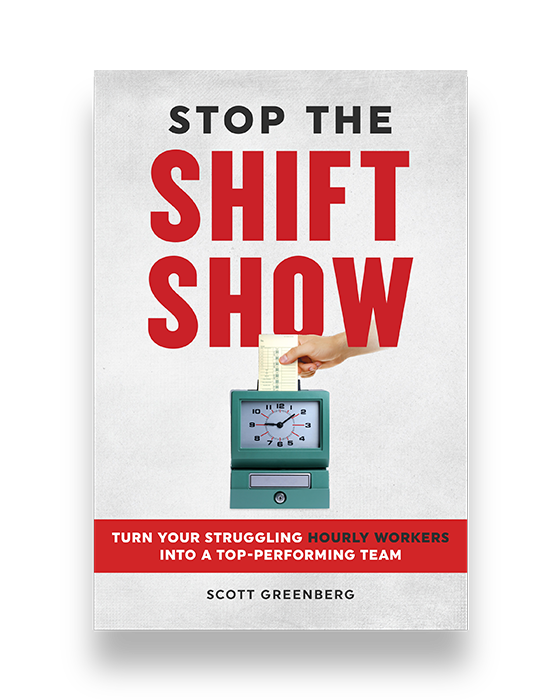
That’s the gap I set out to address. After seeing these challenges repeatedly, I wrote Stop the Shift Show and created the Hourly Employee Management System (HEMS)—a certification program designed to provide practical tools for managing hourly teams. During that process, I also interviewed franchisees who are getting this right—leaders who prove what’s possible when you treat people like people.
In the UK, Amrit Dhaliwal of Walfinch Independent Home Living has built a culture of connection, even with a decentralized team of care workers. From personalized welcomes for applicants to weekly check-ins and handwritten notes of appreciation, his approach has helped him retain up to 90% of his team in a high-turnover industry.
In Florida, Ray and Andrew Howell operate 19 Tropical Smoothie Café locations. Their leadership is grounded in values—“hire right, train ’em right, treat ’em right”—and their stores are fully staffed. They invest in small acts of appreciation, encourage employee feedback, and treat people like family. Culture starts at the bottom, and they’ve built theirs through daily care and consistency.
And in the northeastern U.S., Gary Robins owns 66 Supercuts salons. He leads with recognition and accountability, boosting the self-esteem of stylists with visible displays of appreciation and one-on-one conversations about culture. “Mistakes are OK. Not caring is not OK,” he says. His salons are staffed, his team is engaged, and his business continues to grow—not because he needs more salons, but because he wants to create more opportunity for his people.
These franchisees are thriving because they prioritize leadership. They coach. They communicate. They create cultures worth being part of.
If franchisors want more operators like these, they need to equip more operators like these. That doesn’t mean controlling how franchisees manage their staff. It means offering optional, well-designed training on things like:
- How to conduct job interviews that reveal more than just résumés
- How to onboard new hires in a way that fosters connection
- How to lead team huddles that motivate and inform
- How to give feedback that actually helps
- How to coach employees without making them defensive
- How to create a team culture that keeps people coming back

These aren’t luxuries. They’re essentials. Because leadership isn’t a soft skill—it’s a business skill. One that influences customer satisfaction, employee retention, and ultimately, profitability.
Franchising is about replicating a model. But behind every model is a person responsible for bringing it to life. And behind every hourly worker is a manager who can either lift them up or wear them down.
If we want stronger brands, we need stronger leaders. That begins with giving franchisees the tools to lead well.
Because when managers lead better, everything improves. Customers get better service. Employees stay longer. Locations run more smoothly. And the culture of the brand becomes something people feel, not just something they read about on the website.
On the flip side, doing nothing comes at a cost. Poor people management isn’t just a missed opportunity—it’s an active threat to performance. It leads to higher turnover, weaker customer connections, and more strain on operations. Every untrained manager is a liability waiting to happen.
Most brands already have departments dedicated to operations, marketing, and development. It’s time we give the same attention to leadership — because managing people isn’t a side task. It’s the work that holds everything else together.
This article originally appeared in Global Franchise Magazine.

Scott Greenberg is a keynote speaker, business coach and the author of the books, The Wealthy Franchisee: Game-Changing Steps to Becoming a Thriving Franchise Superstar, and Stop the Shift Show: Turn Your Struggling Hourly Workers into a Top-Performing Team.