I recently wrote this article for Entrepreneur because I’m seeing so many franchise leaders struggling with the same issue: using AI in places where emotional intelligence is still essential. Here’s the full piece with a little more context for my own readers.
As an hourly workforce management author and trainer, I spend most of my time speaking to franchise systems, frontline managers, and business owners. I hear their frustrations, their wins, and all the messy human realities of leading teams. Over the past couple of years, I’ve watched AI weave its way into these organizations in ways that genuinely help, and in ways that quietly undermine what makes people-driven businesses actually work.
When the AI boom began, a lot of leaders felt the rush. Tasks that used to take hours suddenly took minutes. Hiring pipelines felt manageable again. Content got easier. Leaders naturally began asking, If AI can do all this, what else can we hand off?
That’s where things started drifting into territory I know well: culture, leadership, communication, coaching, motivation—the very areas I’m hired to speak and write about. And that’s also where some leaders began getting themselves into trouble.
I’m not an AI expert, nor do I pretend to be. But because I give presentations and lead trainings for franchise systems and frontline managers, I get pulled into a lot of conversations about tools promising to improve culture or performance. As AI hype grew, more and more tech companies started approaching me for endorsements of their platforms. Most of them position themselves as culture boosters or performance enhancers. I don’t take referral fees, so my opinions aren’t for sale. But I’m always curious. I want to find tools that will genuinely help the businesses I serve.
And what concerns me isn’t the technology—it’s the way some companies are applying it to the most human parts of their business.
The AI Tools That Promise Too Much
One platform a company showed me aggregates data across a franchise system and generated individualized recommendations for each owner and the franchise field coaches who support them. If it spots high turnover and low customer satisfaction, it might say: “Improve company culture.”
Sure. And telling a basketball player to “score more points” is also technically good advice. But without how, it’s just noise. That’s why I created the Hourly Employee Management System (HEMS) online training, to help managers and leaders build exceptional teams.
Multiple groups have pitched me tools that gamify culture by awarding badges and prizes for compliments and internal communication. Interesting idea, but culture isn’t something you can win at—it’s something you build. It’s the collective beliefs, values, habits and behaviors that form within a group over time. It’s the social norms that define that group. It’s their way of being together. A tool can support that dynamic, but it can’t create it or manage it.
Culture is emotional. It’s psychological. It’s human. AI doesn’t feel those things. So it can’t teach your team how to feel them, or how to create those feelings.

Where AI Hiring Misses What Humans See Instantly
AI has also reshaped hiring. Sometimes for the better. Sometimes not.
My son recently applied for a job where the “interview” consisted of a prompt on a screen and a countdown clock. No conversation. No back-and-forth. One take. He didn’t move on.
A few weeks later, the same company posted a similar role. He applied again—this time knowing what the process felt like. He wasn’t more experienced. He wasn’t more qualified. He was simply more comfortable performing for a two-minute video countdown. That’s what got him through. The system wasn’t measuring talent. It was measuring familiarity with the system.
Some of the best employees I’ve ever seen aren’t polished interviewers. They’re steady, loyal, humble, and kind. If you sat across from them, you’d feel it. But a timed video prompt won’t pick that up. Nor will it create the safe space that might help job candidates overcome their nerves and reveal their true selves.
There’s a difference between collecting information about a person and actually understanding who they are. One requires data. The other requires being a person yourself.
Where AI Helps—and Where It Hurts
AI is fantastic for improving operations. It can organize schedules, track metrics, analyze trends, document procedures, and quickly surface insights leaders used to spend days gathering. I rely on AI myself for research and idea development.
But AI becomes a liability when businesses use it as a substitute for the parts of leadership that require emotion, judgment, nuance, and humanity.
AI can’t read the look on someone’s face when they’re having a bad day. It can’t spot the quiet employee who’s actually your most reliable performer. It can’t coach someone through frustration. It can’t sense when a customer needs reassurance. It can’t build trust.
Leaders sometimes forget that the most important parts of their job are invisible—tone, empathy, encouragement, connection. AI can’t feel, so it can’t make anyone else feel anything. And people can tell the difference.
Everyone loves to say they’re “in the people business.” But if you hand your most human responsibilities over to software, you’re not in the people business anymore—you’re just in the business. And people can feel that, too.

Let AI Make You Smarter, Not Colder
AI absolutely has a place in business. A big one. Use it to:
- create job posts
- streamline onboarding
- track performance trends
- organize schedules
- automate reminders
- document processes
- summarize meetings
- provide operational clarity
These are smart uses. But when it comes to coaching, hiring, motivating, and culture, the responsibility stays with humans.
The highest-performing businesses I see—whether franchisee, franchisor, owner-operator, or corporate team—use AI to increase clarity and speed and use leaders to increase trust, connection, and meaning. AI can make your business run better. Only people can make your business feel better.
AI will keep getting better. It’ll get faster, smarter, more integrated, and more intuitive. But it will never replace the parts of business that make employees stay, customers return, and companies grow.
If you say you’re in the people business, then the real work isn’t finding ways to automate people—it’s finding ways to show up for them. AI can run your systems. People run your business. And the companies that remember that will be the ones that win.
Before you go, here’s one more insight I didn’t include in the Entrepreneur version.
Bonus Takeaway for My Readers
One thing I didn’t mention in the Entrepreneur version of this article is how much opportunity this moment creates for leaders who are willing to blend AI with real human leadership. The companies I see winning right now aren’t the ones choosing between artificial intelligence and emotional intelligence. They’re the ones disciplined enough to use AI for clarity and speed while doubling down on the conversations, coaching, and connection that only humans can provide.
If you can get your systems running smoother and make your people feel more supported, you’re not just competing—you’re separating yourself from everyone else trying to automate their way to high performance. The future belongs to leaders who can do both.
This article originally appeared in Entrepreneur Magazine. Republished here with additional insights for my readers.

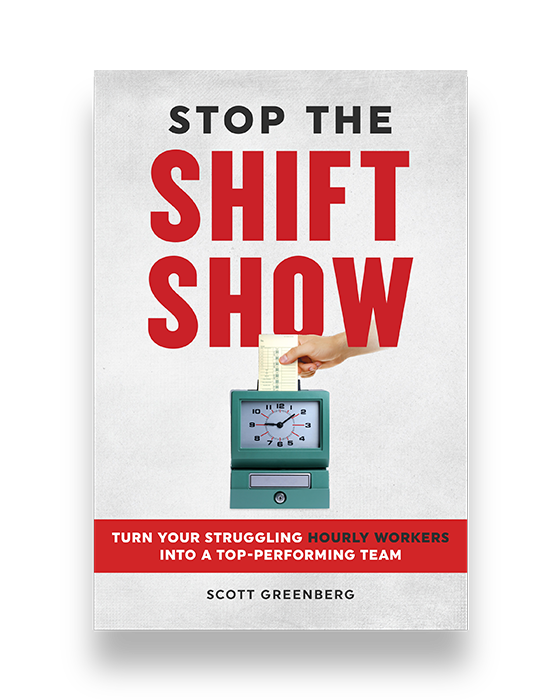
Scott Greenberg is a keynote speaker, business coach and the author of the books, The Wealthy Franchisee: Game-Changing Steps to Becoming a Thriving Franchise Superstar, and Stop the Shift Show: Turn Your Struggling Hourly Workers into a Top-Performing Team.